Table of Contents
The recent demonstrations, organized by factions linked to the LIBRE Party and rallying under the banner of “no turning back,” have sparked increasing apprehension across various segments of Honduran society. With the general elections merely weeks away, the nation finds itself immersed in an environment characterized by heightened political polarization, a weakening of institutional erosion, and widespread public distrust regarding the electoral proceedings.
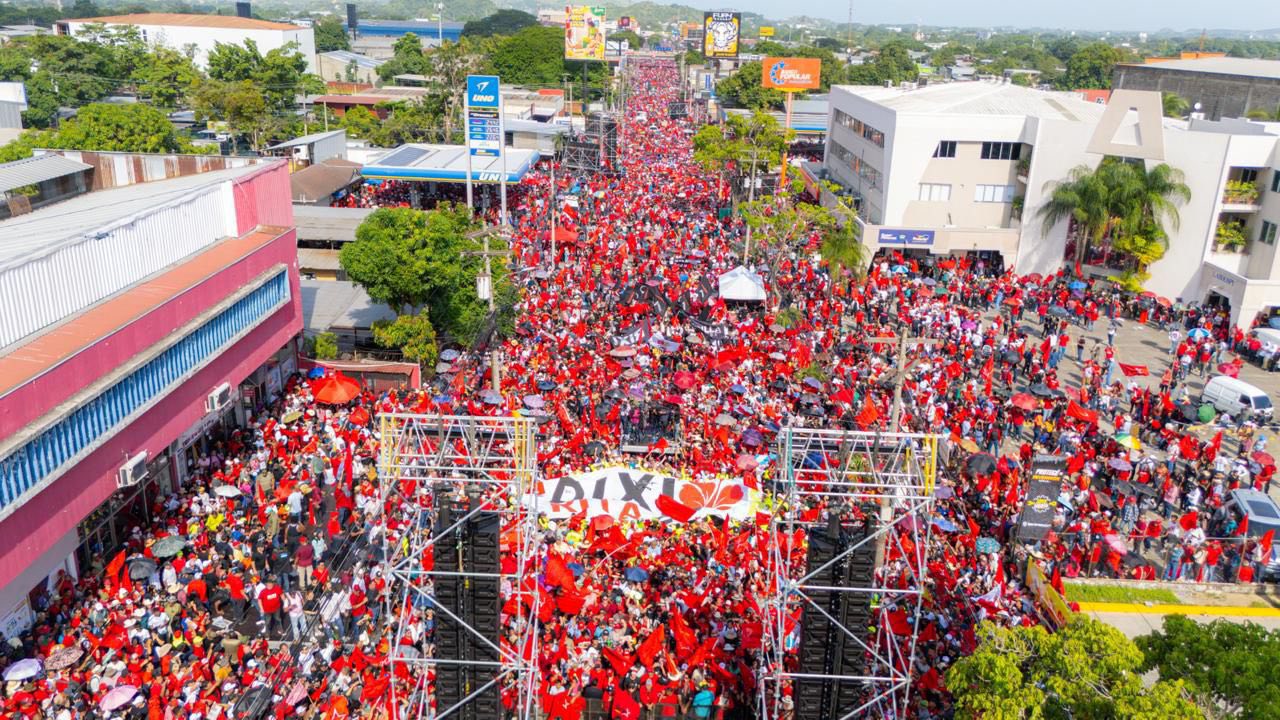
Thousands of ruling party adherents convened at multiple locations across Tegucigalpa on a day that, as stated by government representatives, aimed to “uphold the nation’s re-establishment and safeguard the popular ballot.” Nevertheless, for numerous societal segments and political commentators, these rallies signify an atmosphere of strain and electoral uncertainty during a pivotal period for the country’s administration.
Responses to an aggressive dialogue
Expressions of support for LIBRE’s political project were accompanied by messages that, according to observers, accentuated the confrontational tone of the situation. Some leaders warned that the people “will not allow their victory to be taken away from them,” a statement that various sectors interpret as an indication of resistance to a possible electoral defeat.
One political scientist consulted pointed out that “this type of radical rhetoric increases uncertainty and fear. Instead of promoting peace, it creates the impression that the ruling party is not willing to accept defeat at the polls.” The opposition described the demonstrations as a strategy of political pressure aimed at both voters and electoral institutions, while LIBRE defended them as a legitimate expression of popular support.
Related news
Institutional warnings and calls for calm
Business leaders, human rights organizations, and national observers have expressed concern about the developments. In their view, mass rallies and confrontational rhetoric could complicate efforts to ensure a peaceful and transparent electoral process. In this context, the international community has reiterated its call for respect for the results of the polls and protection of the rule of law.
The National Electoral Council (CNE), for its part, faces growing challenges in maintaining public confidence in its decisions. Tensions between parties, mutual accusations of irregularities, and the deterioration of institutional credibility exacerbate the perception of democratic fragility. The public’s reaction to the LIBRE demonstrations, characterized by fear and rejection, is part of an atmosphere of accumulated distrust toward the structures of power.
Related news
Governance and the risk of social fracture
The time leading up to the election is marked by continuous strain on public bodies. The persistent activity of groups supporting the current administration, alongside their rhetoric of “upholding the refoundation,” casts doubt on the government’s capacity to maintain order once the elections conclude. Numerous experts suggest that the difficulty extends beyond merely organizing the election; it also involves the prospect of preserving a fundamental political agreement to ensure stability post-vote.
On the streets of Tegucigalpa, the general feeling is one of weariness and skepticism in the face of political confrontation. The repetition of marches, accusations, and antagonistic speeches has displaced the debate on proposals and public policies, fueling the perception that the electoral contest is defined more by the struggle for power than by the search for national solutions.
The reaction of citizens and various institutional actors in the coming weeks will be decisive in assessing the real scope of LIBRE’s “no turning back” mobilizations. The country is approaching a critical point where political responsibility, respect for the law, and institutional maturity will be essential factors in avoiding a larger crisis and preserving democratic legitimacy.